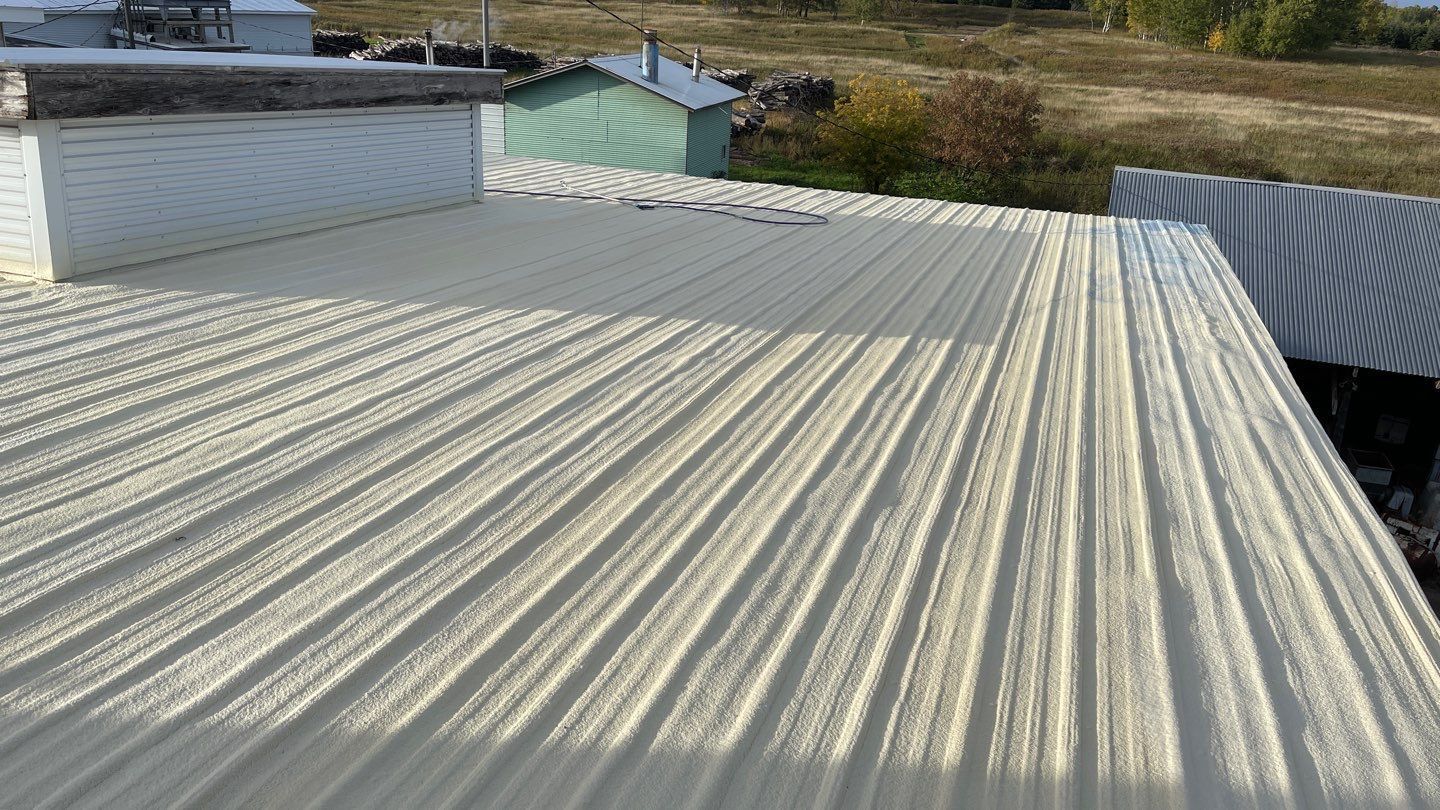

Flexion XL One-Ply Membrane in Kennan for flat roof replacement requiring extended service life and thermal efficiency
Single-Ply Membranes Built for Long-Term Durability
When flat roof coatings cannot address substrate damage or severe ponding, a mechanically fastened single-ply membrane provides a complete roofing system with improved insulation and watertight seam reliability. The Flexion XL system installed by Goldstar Roofing & Coatings uses PVC membrane rolls fastened over ISO board insulation, with seams heat-welded to create a monolithic surface that resists Wisconsin freeze-thaw cycles and wind uplift. This approach suits buildings where long-term weather exposure demands greater durability than coating systems alone can offer.
The roof deck is prepared by removing old roofing material and repairing damaged substrate, followed by installation of one-and-a-half-inch ISO board or a tapered ISO system designed to promote drainage toward roof drains. Flexion XL membrane sheets are rolled out over the insulation, mechanically fastened along edges, and heat-welded at overlapping seams to fuse the material into a continuous, watertight layer. Drains, coping, and flashings are integrated during installation, with free edges sealed using S-360 adhesive and urethane sealant applied at termination bars where the membrane meets vertical surfaces.
Request a roof deck assessment to determine insulation requirements and drainage design before membrane installation begins.
Why Heat-Welded Seams Outperform Adhesive Bonds
Heat welding uses controlled temperature to melt and fuse PVC seams at the molecular level, creating a bond stronger than the membrane material itself. This eliminates the seam separation and edge lifting common in adhesive-bonded or mechanically seamed systems, particularly in high-wind areas or roofs subject to significant thermal cycling. The welded seams remain flexible and watertight without relying on sealants that degrade under UV exposure or temperature extremes.
After installation, the roof presents a uniform white surface that reflects solar heat and reduces cooling loads, and the ISO board below provides consistent R-value across the entire roof plane without the thermal bridging found in fastener-penetrated systems. Drains function more effectively because tapered insulation directs water flow, reducing ponding that accelerates membrane wear and increases weight load on the structure.
The Flexion XL system includes a twenty-year warranty covering membrane defects, seam failure, and fastener blow-off, and it requires periodic inspections to verify drain clearance and flashing integrity. Buildings with heavy rooftop equipment or foot traffic may need walkway pads installed to prevent membrane abrasion and puncture damage in high-use areas..
Common Questions About Single-Ply Membrane Roofing
Building owners evaluating membrane systems often compare installation timelines, insulation options, and long-term maintenance requirements against other flat roofing methods.
What is the difference between a tapered ISO system and flat insulation boards?
Tapered ISO systems use varying board thicknesses to create slope toward drains, which eliminates standing water, while flat boards provide consistent insulation value but rely on existing deck slope for drainage.
How does heat welding create watertight seams on PVC membranes?
A hot-air welder heats overlapping membrane edges to melting temperature and fuses them under pressure, bonding the material at the molecular level so the seam becomes as strong as the surrounding sheet.
Why is Flexion XL recommended for buildings with long-term durability needs?
The PVC material resists punctures, withstands extreme temperature swings without cracking, and maintains flexibility over decades, making it suitable for roofs exposed to harsh weather or those requiring minimal maintenance over extended service intervals.
When should a building owner choose membrane installation over spray foam or coating systems?
Membrane systems work best for roof replacements where the existing substrate is damaged beyond repair, drainage cannot be improved without adding slope, or the building requires maximum service life with minimal long-term intervention.
What maintenance does a single-ply membrane roof require after installation?
Periodic inspections should verify that drains remain clear, flashings stay sealed, and the membrane surface is free from debris or punctures, with any damage repaired promptly to prevent water intrusion beneath the membrane layer.
Goldstar Roofing & Coatings evaluates deck condition, insulation needs, and drainage requirements before recommending membrane installation. Schedule a consultation to review project scope and warranty details for your building.