Membrane Restoration Systems in Marshfield for EPDM and rubber roofs with failing seams and surface degradation
Rubber Roof Coatings That Stop Seam Leaks
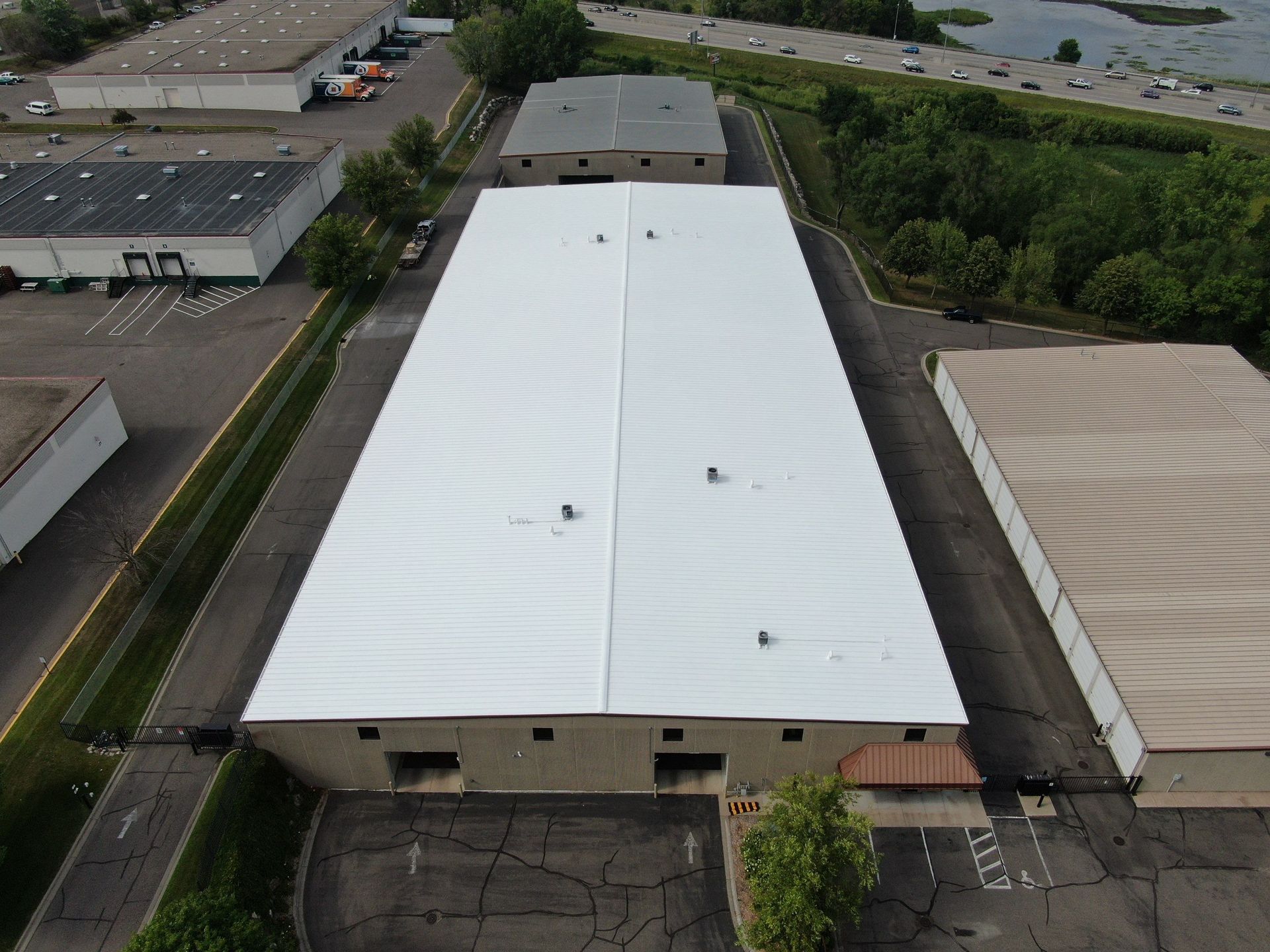
EPDM rubber roofs develop leaks at seams where adhesive fails or tape separators break down after years of thermal movement and UV exposure. The membrane restoration process pressure washes the rubber surface with specialized cleaner to remove oils and contaminants, primes the entire roof, and embeds five-inch fabric strips into every seam using a reinforced base coat before applying Rapid Roof 3 top coat. Goldstar Roofing & Coatings performs this restoration on rubber roofs across Marshfield where seam integrity has deteriorated but the membrane itself remains intact and flexible.
The system focuses on seam reinforcement because rubber roofs installed with adhesive or tape develop separation at seam edges as the rubber shrinks slightly and the bonding agent loses adhesion.
Five inches of fabric embedded into base coat at each seam—spaced approximately three feet apart in both vertical and horizontal runs—creates a mechanically bonded overlap that bridges gaps and prevents water from penetrating between membrane sheets. The base coat saturates the fabric and bonds it to the rubber, forming a flexible, waterproof layer that moves with the membrane during temperature changes.
Schedule a roof cleaning and seam inspection to assess membrane condition before restoration work begins..
What Base Coat and Top Coat Layers Provide
The base coat is applied across the entire roof surface but concentrated five inches into each seam to fully saturate the embedded fabric and create continuity between membrane sheets. This layer seals pinholes, surface cracks, and areas where the rubber has become porous from oxidation. The Rapid Roof 3 top coat provides UV protection and weather resistance, preventing further degradation of the base coat and extending the system's service life with a reflective finish that reduces heat absorption.
Once complete, the roof no longer leaks at seam lines during rain or snowmelt, and the surface resists ponding water without the cracking or bubbling common in aged EPDM. The coating system remains flexible in freezing temperatures, which prevents the brittle failure that occurs when rigid coatings are applied to rubber substrates that expand and contract significantly with temperature swings.
The restoration includes a ten-year warranty and is intended for roofs where the rubber membrane has not torn or separated from the deck. Roofs with extensive punctures, large tears, or wet insulation beneath the membrane require partial or full replacement rather than coating, as the restoration system seals and protects existing material but does not replace compromised substrate or address structural moisture issues.
Questions About Restoring Rubber Roofs
Property owners with EPDM roofs in Marshfield often ask about preparation requirements, fabric reinforcement methods, and how restoration compares to full membrane replacement.
What does pressure washing with cleaner remove from rubber roofs?
The cleaner dissolves oils, algae, and surface contaminants that prevent primer adhesion, ensuring the coating system bonds directly to the EPDM membrane rather than sitting on top of a contaminated layer that could peel or delaminate.
How does fabric reinforcement prevent seam leaks on rubber roofs?
The five-inch fabric strip embeds into wet base coat and spans the seam overlap, bonding both membrane edges together with a flexible layer that prevents water from entering even if the original adhesive or tape has failed.
Why is the base coat applied five inches into each seam rather than covering the entire roof uniformly?
Seams are the primary leak point on rubber roofs, so concentrating base coat and fabric at seams reinforces the weakest areas while the rest of the roof surface receives coating for UV and weatherproofing without unnecessary material buildup.
When should a rubber roof be restored instead of replaced?
Restoration works when the membrane remains intact and flexible but seams have separated or surface oxidation has begun, whereas replacement is necessary if the rubber has torn, delaminated from the deck, or allowed water to saturate insulation below.
What does the ten-year warranty cover on membrane restoration?
The warranty includes seam failure, coating delamination, and material defects that result in leaks, provided the roof is maintained and not subject to physical damage from equipment, foot traffic, or fallen debris.
Goldstar Roofing & Coatings inspects seam condition, membrane flexibility, and substrate moisture levels before recommending restoration. Call the team to arrange a roof evaluation and discuss project timing for your building.